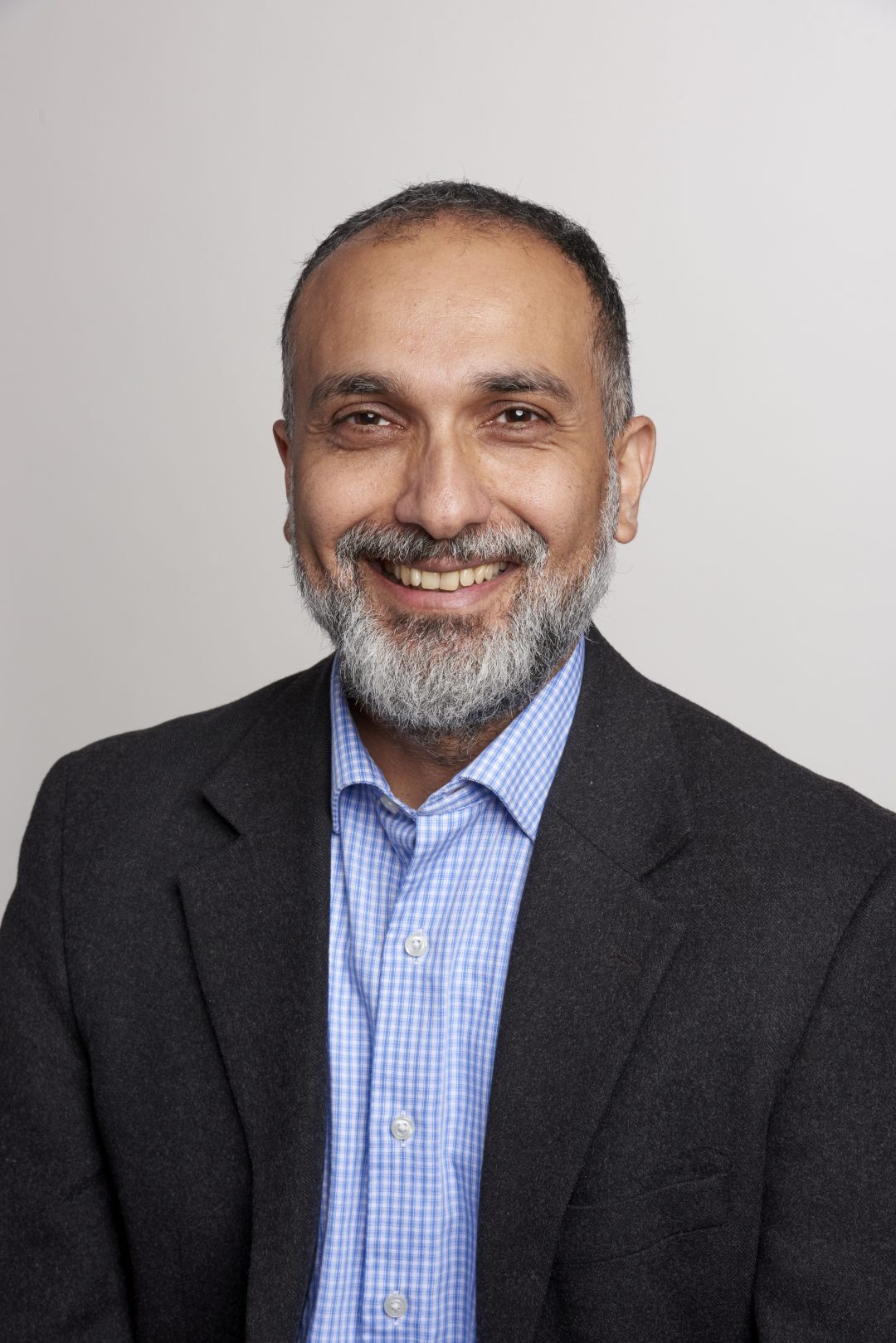
Dr. Manish Arora, Founder and CEO, LinusBio
Dr. Manish Arora is Founder and CEO of LinusBio, and the Edith J. Baerwald Professor and Vice Chairman of the Department of Environmental Medicine at the Icahn School of Medicine at Mount Sinai. An environmental epidemiologist and exposure biologist, he built one of the world’s first Institutes for Exposomic Research at Mount Sinai and spent two decades developing the science behind LinusBio’s platform, which reads the chemical record deposited sequentially in a single strand of hair. His research produced the first molecular biomarker for autism derived from hair, work that led to the company’s first product, ClearStrand-ASD. He recently led LinusBio’s launch of Traced, a direct-to-consumer test that gives people a longitudinal view of their own environmental exposure, and he continues to see his roles as scientist, founder, and father as closely connected.
In this week’s Big4Bio CEO Q&A, Dr. Arora explains the insight that launched LinusBio, what sets the company’s hair-based platform apart from other diagnostic approaches, the milestones and challenges shaping its growth from academic research to commercial product, and where he sees exposome science heading over the next several years.
Your Story
Q1. What was the defining moment or insight that led you to start LinusBio?
The key insight is that it isn’t just how much a person is exposed to that matters for health, it’s the pattern of that exposure over time. Turning that idea into something real meant developing robotics and laser-based assays that analyze the growth rings in hair, letting us map a person’s exposure hour by hour across a month or more. But I didn’t want to stop at the science. Too much academic research never makes it back to the taxpayer as an actual product. I started and lead this company because I want to help people take charge of their environment. You can’t change your genes, but you can change your environment, and I want to give people the tools to do exactly that.
Q2. In the simplest terms, what does LinusBio do, and why does it matter for patients?
LinusBio is a platform company. We’ve built proprietary robotics and laser-based technology that reads metabolic patterns recorded in hair over time. That platform has broad applications, from biomarker discovery to clinical trials to consumer wellness. Traced is how we’re bringing it directly to people: we read a single strand of hair to reconstruct a timeline of what someone has been exposed to over the past month, both the toxic elements they may want to avoid and the essential nutrients their body depends on. For patients, that means moving from a single point-in-time result, like a yearly blood panel, to an ongoing record they can actually track and act on. We also want to make it easy: no needles, no clinic visits, no freezing samples. Just a pair of scissors and a strand of hair, done in under a minute.
The Science & The Strategy
Q3. What sets your platform apart from others working in this space?
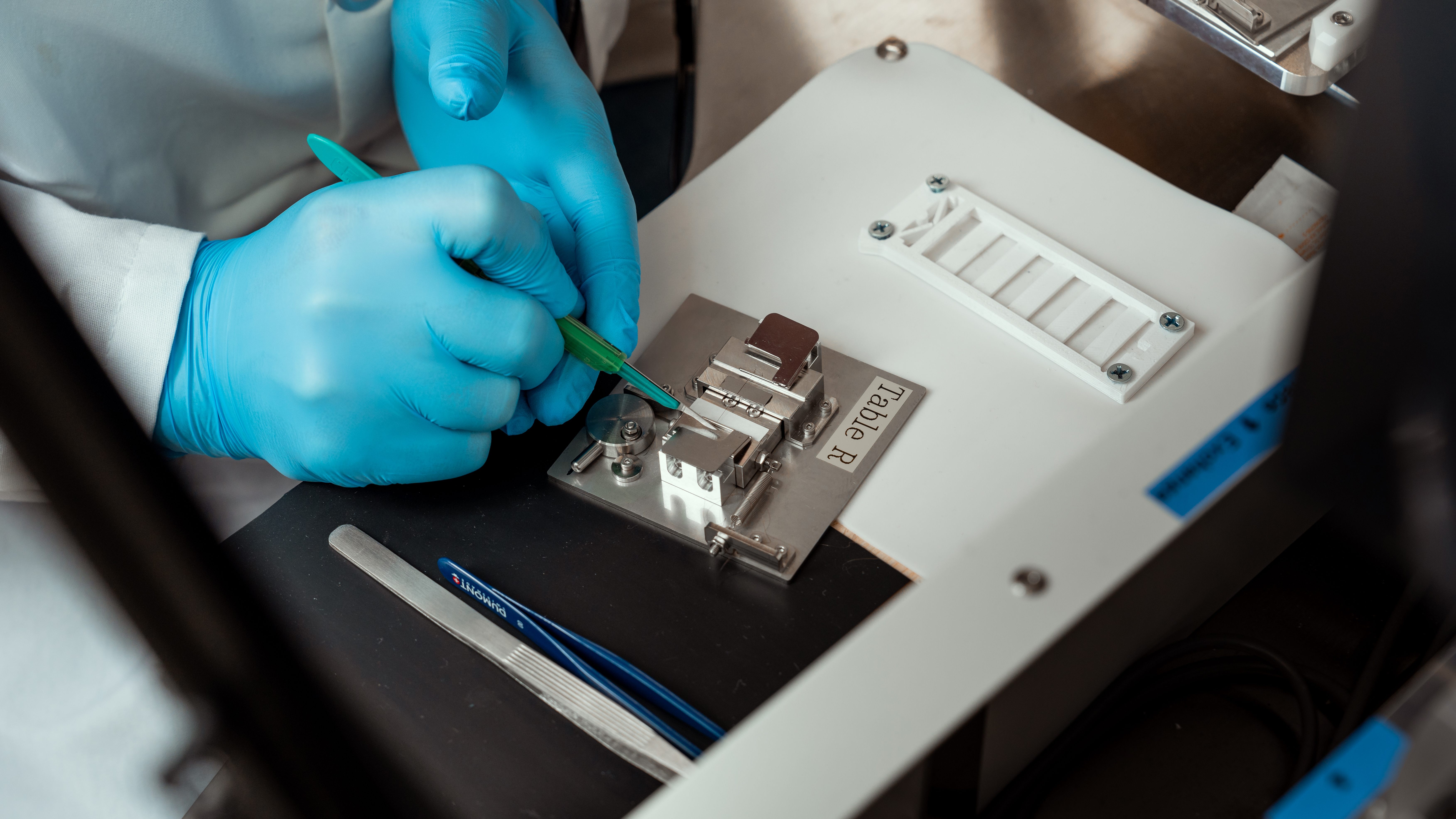
Think of a smartwatch or a ring that tracks your sleep, except you never have to remember to put it on because it’s built into your body. That’s what hair is: a permanent, built-in sensor. What sets us apart is the platform we’ve developed to read it. Combining proprietary robotics with laser ablation mass spectrometry lets us extract elemental data point by point along a hair strand, so we’re reading a sequence over time rather than a single measurement. That capability, built on decades of foundational research at the Icahn School of Medicine at Mount Sinai and benchmarked against a global reference database, is very difficult to replicate. It also means we can apply the same underlying platform to both clinical diagnostics, like ClearStrand, and consumer wellness, like Traced, which is an unusual combination in this space.
Q4. What has been your most important milestone to date, and what’s next?
Our most important milestone has been taking ClearStrand-ASD, our autism biomarker, from academic research into a laboratory-developed test that clinicians can actually order, and now expanding its use to children up to age 10. The next milestone we’re working toward is scaling Traced nationally as a consumer product and extending the same underlying biomarker science into other conditions, including ALS and ADHD, where there has historically been no objective molecular test at all.
Q5. What’s the biggest challenge you’re facing right now, and how are you tackling it?
The biggest challenge right now is educating a market that isn’t yet familiar with exposomics on why longitudinal exposure data matters, while also meeting the speed and expectations of a consumer product launch. We’re tackling it by leaning on real-world proof points. For example, we worked with communities affected by the Eaton and Palisades wildfires, where residents used Traced to understand elemental exposure in homes damaged by smoke and fire residue. Seeing the science answer a concrete, personal question is what makes the value tangible for people.
Q6. ClearStrand-ASD carries an FDA Breakthrough Device designation. What has that meant for the company’s path to broader clinical adoption?
The designation has mattered for two reasons. It gives us a more collaborative, expedited review pathway with the FDA, and it signals to clinicians and health systems that the agency recognizes a real unmet need here. ClearStrand-ASD has a rule-out accuracy of 95 percent, which gives providers and families an objective, data-driven basis for their next steps instead of a long wait for a behavioral diagnosis. That designation has helped us move faster toward making the test more broadly accessible.
Leadership & Ecosystem
Q7. What has surprised you most about being a CEO in life sciences?
What surprised me most is how much of the job is translation. I spent years as an academic scientist, and being a CEO means constantly translating dense, technical science into something a consumer, a clinician, or an investor can act on, without losing the rigor behind it. I didn’t fully appreciate, until I was in the role, how much trust depends on that translation being done honestly and clearly.
Q8. How would you describe the culture you’re building, and why does that matter for the science?
We’re building a culture of impact resting on two pillars: scientific rigor and empathy. If our work doesn’t help people, we have failed. Our team includes scientists, engineers, and clinicians, and everyone is expected to question their own results as carefully as they would someone else’s. That matters for the science, because the moment you stop scrutinizing your own data is the moment you risk losing the trust of the families and clinicians who rely on it.
Looking Ahead
Q9. Where do you see LinusBio in three years, and what will have to go right to get there?
In three years, I’d like to see Traced as a standard panel in every doctor’s wellness report, a familiar, trusted part of how people think about their own health, the way an annual blood panel is today. I also envision several new biomarkers beyond autism in clinical use, particularly for conditions like ALS and ADHD that currently lack any objective molecular test. Getting there will require continuing to generate rigorous clinical evidence at the same pace we’re building consumer trust.
Q10. What is one thing about the life sciences industry you’d change, and what gives you optimism despite it?
If I could change one thing, it would be the pace at which validated biomarkers move from academic research into something patients and clinicians can actually use. Regulatory pathways haven’t fully caught up with the kind of longitudinal, high-density data that platforms like ours can generate. What gives me optimism is seeing how quickly people embrace these tools once they understand them, like the wildfire-affected communities who used Traced to make informed decisions about returning to their homes. That tells me the appetite for this kind of transparency is real.
About The Big4Bio CEO Weekly Q&A
Every Monday, Big4Bio spotlights a life sciences CEO from one of our eight coverage regions — Boston, San Francisco Bay Area, San Diego, Philadelphia, New York City, the Capital Region, Los Angeles, and Seattle. Each feature is promoted across all eight Big4Bio daily newsletters, reaching 30,000+ life sciences professionals. CEO participation is complimentary and editorial — every CEO approves the final Q&A before publication.
Are you a life sciences CEO or do you represent one? Contact Big4Bio editor Marie Daghlian at marie@big4bio.com to be considered for an upcoming feature.