
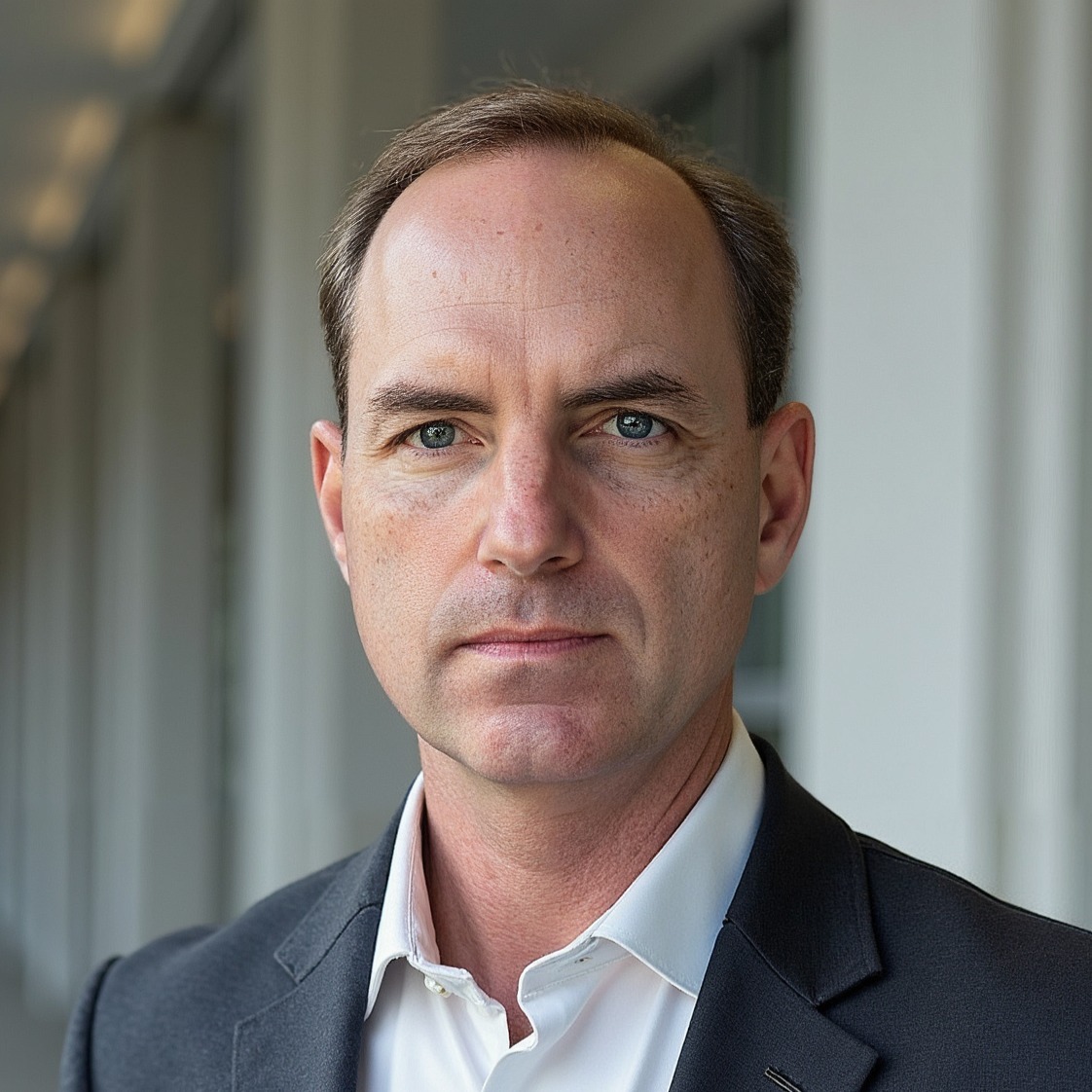
Robert Jacks has spent more than 25 years in the biopharmaceutical industry, founding or co-founding multiple companies and raising more than $300 million along the way. Before leading Boston-based Sparrow Pharmaceuticals as President and CEO, he served as President and CEO of Indalo Therapeutics and as President, CFO, and Co-Founder of Symbiomix Therapeutics, which was sold after achieving NDA approval for Solosec®. He has also held corporate development, business development, and investing roles at Tobira Therapeutics, ACT Biotech, and OrbiMed Advisors, after beginning his career at Pfizer. At Sparrow, he is betting that cortisol explains why millions of patients with type 2 diabetes, hypertension, and obesity don’t respond to today’s best drugs, GLP-1s included. The company’s lead candidate, clofutriben, is a once-daily oral HSD-1 inhibitor now in the Phase 2b CAPTAIN-T2D trial for difficult-to-control type 2 diabetes, with a readout expected in Q4 2027.
In this CEO Weekly Q&A, Jacks explains why he was drawn to a mechanism that earlier drugs had validated but never fully delivered on, and how clofutriben’s distinctive binding overcame the tachyphylaxis that limited previous HSD-1 inhibitors. He walks through the “lucky and good” moment that drove Sparrow’s pivot into cardiometabolic disease and its Series B financing, the awareness gap that keeps elevated cortisol out of most clinical conversations, and why Boston’s endocrinology expertise matters to a small company. He also shares his philosophy on leadership and culture, his three-year outlook, and his view of the “explicit pact” between the drug industry and the public.
Your Story
Q1. What was the defining moment or insight that led you to start — or take the helm of — your company?
Great science, world-class investors, a big market opportunity. What’s not to like?
But seriously, Sparrow offered the opportunity to jump right into Phase 2 clinical trials addressing high unmet needs with a very compelling drug candidate. Clofutriben shares its mechanism of action with a number of drugs that had previously been in clinical development with mixed results. Those candidates validated the safety and biological hypothesis of the mechanism but, in most cases, showed only moderate efficacy. We believed we understood why, and that we could overcome those problems to finally realize the tremendous promise of this class of agent.
I most enjoy working on projects in Phase 2. By then, the agent has been derisked from a safety standpoint and is being given to patients with the target disease for the first time. That is an extremely exciting moment: you get to see whether a new drug can actually improve disease. Phase 2 is also where development can be most creative. Phase 1 is largely cookie-cutter, and regulatory requirements drive Phase 3. In Phase 2, you can design a trial that demonstrates the unique value of your innovation.
Q2. In the simplest terms, what does your company do and why does it matter for patients?
Everyone is talking about Ozempic and similar GLP-1 drugs today, and they have been transformative for patients with diabetes, obesity, and related cardiometabolic diseases. Unfortunately, these drugs don’t work for everyone. Millions of patients still struggle to control their disease despite the availability of these and other drugs, leaving them at risk for serious health problems. We believe we understand why this is the case for many of them, and that we can help improve their health and quality of life when current drugs aren’t working well.
Recent research has validated what some scientists have long suspected: many patients with difficult-to-control cardiometabolic disease have elevated cortisol levels that make them resistant to current drugs and drive comorbidities like high blood pressure and high cholesterol.
Cortisol, sometimes called the “stress hormone” because your body makes more of it when you are under stress, helps regulate many important bodily functions, including glucose, fat, and muscle metabolism and blood pressure, as well as sleep, mood, and memory. When your body makes too much cortisol, all of those functions can go haywire, causing diabetes, hypertension, high cholesterol, and obesity. And because current drugs don’t affect cortisol activity, elevated cortisol can make them less effective against these conditions.
What’s so frustrating for patients is that the vast majority don’t know elevated cortisol is holding them back. It’s like swimming upstream against an invisible current. Even worse, many are blamed by their physicians, friends, and family for their lack of progress. People assume that patients who don’t respond to today’s best medicines must not be taking them, or must be secretly eating junk food. We can offer those patients an explanation and, hopefully, a solution.
Our lead candidate, clofutriben, is a novel, once-daily oral drug that down-regulates local cortisol production in metabolically active tissues, reducing the negative effects of elevated cortisol. Its mechanism is complementary to leading therapies, including GLP-1s, and in clinical trials it has improved glycemic control, blood pressure, weight, and cholesterol while being generally safe and well tolerated.
We are currently running a Phase 2b trial in patients who can’t adequately control their type 2 diabetes despite taking two, three, or even more medications, potentially including insulin. We test them for elevated cortisol and then treat them with clofutriben. We plan to expand into clinical trials in resistant hypertension and resistant obesity in the near future, and we are extremely excited that clofutriben could offer a new therapeutic option to potentially millions of patients struggling to control their cardiometabolic disease.
The Science & The Strategy
Q3. What is it about your approach — your platform, your technology, your pipeline — that you believe sets you apart from others working in this space?
What we’re doing is different in three important ways.
First, clofutriben works differently than any currently approved drug for diabetes, obesity, or hypertension. It addresses elevated cortisol, an underlying driver of resistance to today’s agents that also exacerbates comorbidities like high cholesterol. That means it could work when other drugs don’t, and could be complementary when used in combination. That is critical for the millions of patients who struggle to control their disease even with GLP-1s and other new agents.
Second, it works differently than any other drug currently used to address elevated cortisol. Some drugs are approved to treat endogenous Cushing’s syndrome, a severe and rare disease of highly elevated cortisol, and we know at least one of them has the potential to help patients with cardiometabolic disease and elevated cortisol. However, those drugs can cause adrenal insufficiency (AI), a potentially fatal condition of having too little cortisol. They have to be titrated carefully, with patients monitored for AI, which most physicians treating diabetes are not prepared to do. Many of those drugs also have significant side effects or are complex to administer because of interactions with other common medications. We don’t believe clofutriben will have any of those problems, which makes it uniquely suited to the large population of patients with cardiometabolic disease and elevated cortisol.
Third, clofutriben differs from other drugs with the same mechanism that were previously in development with mixed results. Some other HSD-1 inhibitors showed tachyphylaxis of effect after just a few days of dosing: the drug seemed to work at first, then quickly stopped working. In particular, other drugs showed tachyphylaxis of HSD-1 inhibition in fat cells, a very important tissue in diabetes and obesity. That was thought to be a class effect that severely limited the potential of every similar drug. We believed clofutriben would not show this effect in fat cells because of the different way it binds to HSD-1. We then proved that hypothesis in the clinic, and we believe this property could make clofutriben more effective than other HSD-1 inhibitors.
Q4. What has been your most important milestone to date, and what’s the next one you’re working toward?
I like to say that it is helpful to be lucky, and it is helpful to be good. We have been a little bit of both. Several factors came together last year that drove a major strategic pivot into difficult-to-control cardiometabolic disease, catalyzed our Series B financing, and set us on our current trajectory.
When we started Sparrow, we set out to prove that HSD-1 inhibition, once considered an extremely promising mechanism, could be groundbreaking if certain specific issues were addressed. Previous HSD-1 inhibitors had been safe and had validated the underlying biology but had shown mixed efficacy. We thought we knew why, and that we could achieve superior results with a better molecule and better patient selection.
First, we validated that we had a better molecule. The tachyphylaxis seen with other HSD-1 inhibitors in fat tissue was thought to be caused by a buildup of cortisone that eventually outcompeted the drug for its target. Because of the way clofutriben binds to HSD-1, it has an extremely high binding energy that we believed would resist that cortisone buildup. In fact, that’s exactly what happened. We proved that clofutriben does not demonstrate tachyphylaxis in fat tissue, overcoming what had been thought to be a limitation of every drug with this mechanism.
Second, because HSD-1 inhibition specifically targets cortisol, we thought clofutriben might work better in patients we knew were affected by elevated cortisol than in the general population. We initially tested this hypothesis in patients with the rare disease endogenous Cushing’s syndrome, a constellation of cardiometabolic diseases caused or exacerbated by severely elevated cortisol. We were thrilled with the results, which not only validated our hypothesis but also offered a potential new option for patients with this devastating disease… and that’s when luck struck.
At about the same time we published our results in Cushing’s, another company published data demonstrating that millions of patients with difficult-to-control type 2 diabetes were affected by elevated cortisol, and that a cortisol-directed agent could treat their otherwise resistant diabetes. We immediately realized that having proven our hypotheses about HSD-1 inhibition, we potentially had the perfect agent for this large population with high unmet needs. So, we pivoted, quickly raised financing from world-class investors, and launched our current Phase 2b trial. We also made sure that patients with endogenous Cushing’s syndrome could potentially participate, in the hope that clofutriben will eventually be a new therapeutic option for them as well.
Next up is the readout from that trial, CAPTAIN-T2D, expected in Q4 2027, which should tee us up to initiate Phase 3 trials. We also hope to expand development into resistant hypertension and resistant obesity in the near future.
Q5. What is the biggest scientific or business challenge you’re facing right now, and how are you tackling it?
Awareness. Historically, elevated cortisol was not recognized as a prevalent driver of treatment resistance, because the field lacked consensus on a practical, widely deployable way to screen for it in a cardiometabolic setting, and because there were no agents suitable to treat a large population once identified. Many providers still believe chronically elevated cortisol is too rare to be relevant to their practice, so it never enters the conversation.
Recent publications have helped address the first half of the problem, establishing how to enrich for a population likely to have elevated cortisol and screen them with a simple, minimally invasive, inexpensive test called the dexamethasone suppression test.
We at Sparrow are tackling the second half. Our CAPTAIN-T2D trial aims to demonstrate that clofutriben could be a safe, effective, and convenient option for patients with difficult-to-control diabetes, over 75% of whom have elevated cortisol at a level associated with adverse cardiovascular and cardiometabolic problems.
Leadership & Ecosystem
Q6. What has surprised you most about being a CEO in life sciences — something you didn’t fully appreciate until you were in the role?
How much leadership truly matters. I often say that you can have the best ship and the best crew, but if no one is at the tiller, you will eventually end up on the rocks. I also tell my team that if we are not all aiming at the same target, we are unlikely to hit it. I’m obviously full of corny catchphrases!
To me, leadership is about inspiring people to follow you. How does one do that? It’s not about being the best technically, the smartest, or the most knowledgeable. It’s about showing your team that you have their best interests at heart, that you will fight for them, and that you care about them as people. If you can truly do that (and you can’t fake it; people can tell from a mile away), people will amaze you. I am in awe of my team’s dedication. What this small group of people is accomplishing impresses me every day.
Q7. How would you describe the culture you’re building at your company, and why does that matter for the science?
We are trying to build an environment where people come first. We are all complicated individuals with complicated lives, and showing empathy for each other builds the trust needed for vulnerability. Why does that matter for science? If people are afraid to be vulnerable, they won’t share new ideas or take bold action.
What we are trying to do is difficult and full of obstacles. We are a very small team, and we need the full talents and abilities of every single person. In a risk-averse environment, people keep their heads down and their mouths shut. They do the minimum so they won’t be criticized. We can’t be successful in that environment.
Q8. What role does your region’s life sciences ecosystem play in your company’s growth? What makes it a good home base for what you’re building?
Boston gives us access to a depth and breadth of people we simply can’t assemble anywhere else: scientists, clinicians, and regulatory and development veterans who have taken metabolic and cardiovascular programs from bench to approval. For a company in endocrinology and cardiometabolic disease, that matters enormously. The academic medical centers here have some of the deepest endocrinology and cardiometabolic expertise in the world, and we benefit from that both in recruiting and in the advisors and collaborators around us.
Looking Ahead
Q9. Where do you see your company in three years, and what will have to go right to get there?
Three years from now, I expect clofutriben to be in pivotal development for difficult-to-control type 2 diabetes, with Phase 3 trials well underway. I also expect us to have at least two additional Phase 2 trials ongoing, in resistant hypertension and resistant obesity.
These conditions are important to us not just as potential new indications. What we are really doing is studying different subsets of a large patient population that is underserved by today’s agents because they suffer from broad metabolic dysfunction caused by elevated cortisol. It is no accident that the strongest predictor of whether someone with difficult-to-control diabetes has elevated cortisol is that they also have hypertension. It is also telling that obese patients who also have type 2 diabetes lose the least weight, on average, on GLP-1s, and those who don’t respond on weight also tend not to see other benefits, such as lower cholesterol. Rather than simply treating siloed indications, we believe we can demonstrate broad health benefits from clofutriben across a range of measures that truly improve health and quality of life.
To get there, we need to execute internally and continue to build awareness of, and enthusiasm for what we are doing in the scientific, medical, and financial communities.
Q10. What is one thing about the life sciences industry today that you would change if you could — and what gives you optimism despite it?
As an industry, we haven’t done enough to show the public how important our work is. When that story goes untold, trust erodes and resistance to paying for innovation grows. If we lose society’s willingness to fund this work, tomorrow’s wonder drugs will never be discovered or developed.
I see our industry as engaged in an explicit pact with the public that both sides must uphold. The public, through its governments, has agreed to grant new drugs temporary monopolies, in the form of patent protection, as an incentive to invest in innovation. That pact must not be undermined by price controls, or that investment will dry up. Arguments that pharmaceutical companies engage in excessive pricing don’t hold up to the numbers: net ROI on pharmaceutical research has averaged only about 4–5% over the past 20 years.
Equally important, on the other side, our industry has a responsibility not to take advantage of that system by creatively extending the monopoly period beyond what is necessary to provide the right incentives, usually about 10 to 15 years. After that, our industry must actively work to make medicines generic and as inexpensive as possible. Society has “bought” the innovation at that point, and it should essentially be available at cost, as most generic medicines are.
What gives me optimism is that even politicians who are critical of our industry occasionally say something that shows they understand how critical continued biomedical innovation is.
About The Big4Bio CEO Weekly Q&A
Every Monday, Big4Bio spotlights a life sciences CEO from one of our eight coverage regions — Boston, San Francisco Bay Area, San Diego, Philadelphia, New York City, the Capital Region, Los Angeles, and Seattle. Each feature is promoted across all eight Big4Bio daily newsletters, reaching 30,000+ life sciences professionals. CEO participation is complimentary and editorial — every CEO approves the final Q&A before publication.
Are you a life sciences CEO or do you represent one? Contact Big4Bio editor Marie Daghlian at marie@big4bio.com to be considered for an upcoming feature.