.jpg)
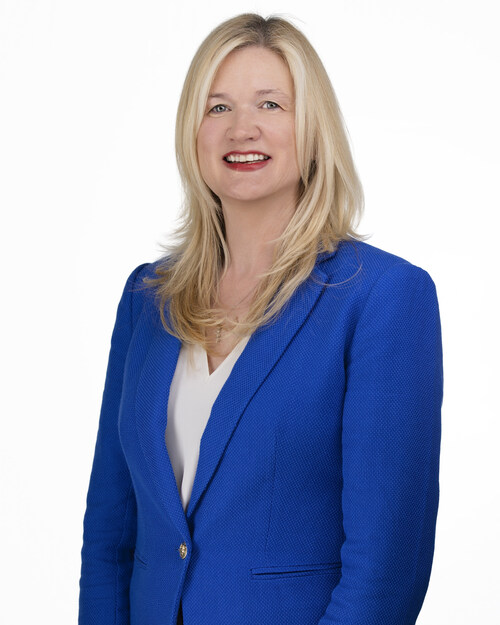
Dr. Orla Cloak, CEO, Minaris
Dr. Orla Cloak brings the perspective of both a scientist and a seasoned business executive to the CEO role at Minaris, a global CDMO and biosafety testing partner serving the cell and gene therapy and biologics sectors. With a background in microbiology and decades of experience spanning general management, commercial operations, and strategic planning, Dr. Cloak took the helm at Minaris to tackle one of the industry’s most persistent problems: the fragmentation that slows promising therapies from lab to patient.
Under her leadership, Minaris has unified its Advanced Therapies manufacturing and Advanced Testing divisions into a single, coordinated organization—operating across global manufacturing sites and a centralized testing center of excellence in Philadelphia. In this Q&A, Dr. Cloak discusses what drew her to Minaris, the dual challenge of scientific complexity and operational fragmentation facing the CGT field, the culture she is building to enable better outcomes, and her vision for the company’s next chapter.
August 3, 2026
Your Story
Q1. What was the defining moment that led you to take the helm at Minaris?
What really attracted me to Minaris was the opportunity to build something truly differentiated at a pivotal moment—for both innovators and the patients they serve. Across the industry, I saw a persistent gap between scientific breakthroughs and the operational realities required to bring therapies forward. Whether in cell and gene therapy manufacturing or biosafety and analytical testing, too many programs were being slowed by fragmentation, complexity, and a lack of coordination across critical development stages.
Minaris brought together two essential capabilities under one organization: Advanced Therapies manufacturing and GMP biosafety and analytical testing. That combination creates a real opportunity to simplify development, reduce handoffs, and offer a more coordinated path from early-stage innovation through commercialization. What made it compelling for me was the chance to move beyond traditional models and build a true partner to our customers. When you combine scientific expertise with reliable execution across both manufacturing and testing, you remove the barriers that slow progress—and ultimately help life-changing therapies reach more patients.
Q2. In plain terms, what does Minaris do—and why does it matter for patients?
At the simplest level, Minaris helps turn scientific breakthroughs into therapies that reach patients. We support companies developing cell and gene therapies with services spanning process and analytical development, manufacturing, and release testing; we also provide advanced testing services across multiple modalities, including biologics and CGT.
Through our two business units—Minaris Advanced Therapies for manufacturing and Minaris Advanced Testing for GMP biosafety and analytical testing—companies can work with us across both areas or engage with either independently, depending on their needs. What makes that important is that these processes are incredibly complex and often fragmented. Companies need partners they can trust to deliver with consistency and scientific rigor. Our deep expertise, global reach, and commitment to quality allow us to support our partners in a way that is both reliable and adaptable to their specific programs.
The Science & The Strategy
Q3. What sets Minaris apart from other CDMOs and testing partners in this space?
What sets Minaris apart is the depth of scientific and regulatory expertise we bring across both manufacturing and testing. In a space as complex as advanced therapies and biologics, success depends not just on capability, but on experience—knowing what it takes to scale processes, navigate regulatory expectations, and generate data that stands up to scrutiny.
Across our Advanced Therapies and Advanced Testing businesses, we combine that strong track record with a solid operational foundation. Our global CDMO network provides manufacturing scale, while our centralized testing center of excellence in Philadelphia enables consistent, high-quality execution. That combination allows us to support a wide range of programs with reliability and precision. Just as important is how we work with our customers. We see ourselves as a true partner, working closely with teams to solve challenges, strengthen development strategies, and keep programs moving forward—with transparency, accountability, and a focus on getting it right the first time.
Q4. What has been your most important milestone to date, and what’s next?
One of the most important milestones for Minaris has been the transformation of the business into a unified organization under new ownership and leadership. Bringing together Minaris Regenerative Medicine and the former WuXi AppTec advanced therapies operations into a single platform—alongside our biosafety and analytical testing capabilities—marked a real turning point. It allowed us to move from a collection of strong legacy organizations to one company with a shared focus on quality, accountability, and execution.
That transformation has strengthened how we operate and how we support customers, creating a more consistent and coordinated experience across both manufacturing and testing. Looking ahead, our next milestone is continuing to strengthen that foundation—further simplifying how customers engage with us and ensuring we deliver predictable, high-quality outcomes across every program.
Q5. What is the biggest challenge Minaris is tackling right now?
One of the biggest challenges in our space right now is the growing complexity of bringing advanced therapies—especially cell and gene therapies—from early development through commercialization. The science is moving incredibly fast, but development strategies are not always aligned early enough with manufacturing realities. As a result, teams often find themselves navigating fragmented partners, evolving regulatory expectations, and pressure to move faster without compromising quality.
In CGT manufacturing, one of the most pressing issues is reducing cost per treatment while advancing programs at pace. To address that, we work closely with customers in a very hands-on way—often through collaborative sessions where we examine processes from multiple angles to find more efficient paths and reduce cost of goods. On the testing side, the priority is generating reliable, regulator-ready data without delays. In both cases, our focus is on reducing complexity without sacrificing quality: creating more predictable ways of working, being transparent with our partners, and delivering consistent execution. When we align early and work closely with our customers, we help keep programs on track so therapies reach patients faster, safely, and without compromise.
Leadership & Ecosystem
Q6. How would you describe the culture you’re building at Minaris—and why does it matter for the science?
The culture we’re building at Minaris is grounded in accountability, transparency, and a strong sense of shared purpose. We are very intentional about creating an environment where people feel empowered to take ownership, speak up, and work collaboratively across teams. In a space as complex as advanced therapies and biologics, that kind of alignment isn’t just nice to have—it’s essential.
What we emphasize internally is being proactive, working as one team, and staying adaptable as programs evolve. No two development paths are exactly the same, and the ability to respond quickly while maintaining high standards is critical. When people have visibility into challenges and feel genuinely accountable for outcomes, decisions get made more effectively and issues are addressed earlier. That directly impacts the science. The quality of the data, the reliability of the process, and the ability to move programs forward all depend on how well teams work together. A culture that supports strong execution creates the conditions for better scientific outcomes—and a more efficient path to patients.
Q7. What role does Philadelphia play in Minaris’s growth?
Philadelphia plays a central role in our growth—particularly as the center of excellence for our Minaris Advanced Testing operations, a CDMO manufacturing site, and our U.S. headquarters. The region has evolved into a much more complete life sciences ecosystem, one increasingly focused not just on discovery but on development, testing, and commercialization. That’s critical for a company like ours that sits at the intersection of science and execution.
What makes Philadelphia especially compelling is the depth of scientific talent, the strength of its academic and clinical institutions, and its growing infrastructure for advanced therapies. There’s a real sense of collaboration across the ecosystem—from early-stage innovators to established companies—that creates meaningful opportunities to engage and partner. At the same time, our global footprint allows us to connect that regional strength to a broader network across the U.S., Europe, and Japan. That combination of local expertise and global reach lets us stay closely connected to the Philadelphia ecosystem while supporting customers wherever they are in their development journey.
Looking Ahead
Q8. Where do you see Minaris in three years—and what needs to go right to get there?
Over the next three years, we see Minaris continuing to strengthen its position as a trusted partner across both CGT manufacturing and biosafety and analytical testing. Success means being known not just for our capabilities, but for how we execute—delivering a consistent, predictable experience that helps our customers move programs forward with confidence.
To get there, we need to do three things well. First, continue to build on our strong foundation of quality and ensure it is reflected in every program we support. Second, keep simplifying how customers engage with us, reducing complexity and improving coordination across development. Third, continue investing in our people, our infrastructure, and our ability to scale alongside partners as more therapies move toward commercialization. If we do this well, the outcome is straightforward: more therapies progress successfully, more programs reach critical milestones, and more patients gain access to treatments that can change their lives.
Q9. If you could change one thing about the life sciences industry today, what would it be—and what gives you optimism despite it?
If there’s one thing I would change, it’s how fragmented the development process still is. We have extraordinary science, but too often the path to getting therapies to patients is slowed by disconnected systems, multiple handoffs, and insufficient coordination across manufacturing, testing, and regulatory steps. For patients waiting on these therapies, that complexity isn’t just operational—it has real consequences.
What gives me optimism is that the industry is starting to shift. There’s a growing recognition that how we work matters just as much as the science itself. Companies are looking for ways to simplify development, improve collaboration, and bring more consistency and accountability into the process—and that mindset is creating genuine momentum toward more integrated, patient-focused models. I’m also optimistic because of the people behind this work. Across the industry, there is a shared sense of purpose and urgency that’s hard to miss. When you combine that with the pace of scientific innovation we’re seeing in cell and gene therapies and biologics, there’s a real opportunity not only to advance the science, but to fundamentally improve how quickly and reliably these therapies reach the patients who need them.
On Quality
Q10. How do you think about quality at Minaris, and how does it shape the way you partner with customers?
At Minaris, we think about quality as something much broader than compliance—it should be in our DNA. It’s foundational to how we operate and how we partner. In a field as complex as multimodality biologics and advanced therapies, where the science is rigorous and the stakes are high, quality is what enables trust, consistency, and ultimately progress.
What we’ve focused on is embedding quality into every stage of development, across both Minaris Advanced Therapies manufacturing and Minaris Advanced Testing. That means building systems and ways of working that are proactive, transparent, and grounded in clear accountability—identifying risks early, communicating openly, and making decisions with the full context in mind. For our customers, that translates into a more predictable and reliable experience. When quality is built into the process rather than treated as a final checkpoint, it supports better execution, stronger regulatory outcomes, and fewer surprises along the way. And ultimately, it’s what helps therapies move forward with confidence and reach patients safely and reliably.
About The Big4Bio CEO Weekly Q&A
Every Monday, Big4Bio spotlights a life sciences CEO from one of our eight coverage regions — Boston, San Francisco Bay Area, San Diego, Philadelphia, New York City, the Capital Region, Los Angeles, and Seattle. Each feature is promoted across all eight Big4Bio daily newsletters, reaching 30,000+ life sciences professionals. CEO participation is complimentary and editorial — every CEO approves the final Q&A before publication.
Are you a life sciences CEO or do you represent one? Contact Big4Bio editor Marie Daghlian at marie@big4bio.com to be considered for an upcoming feature.