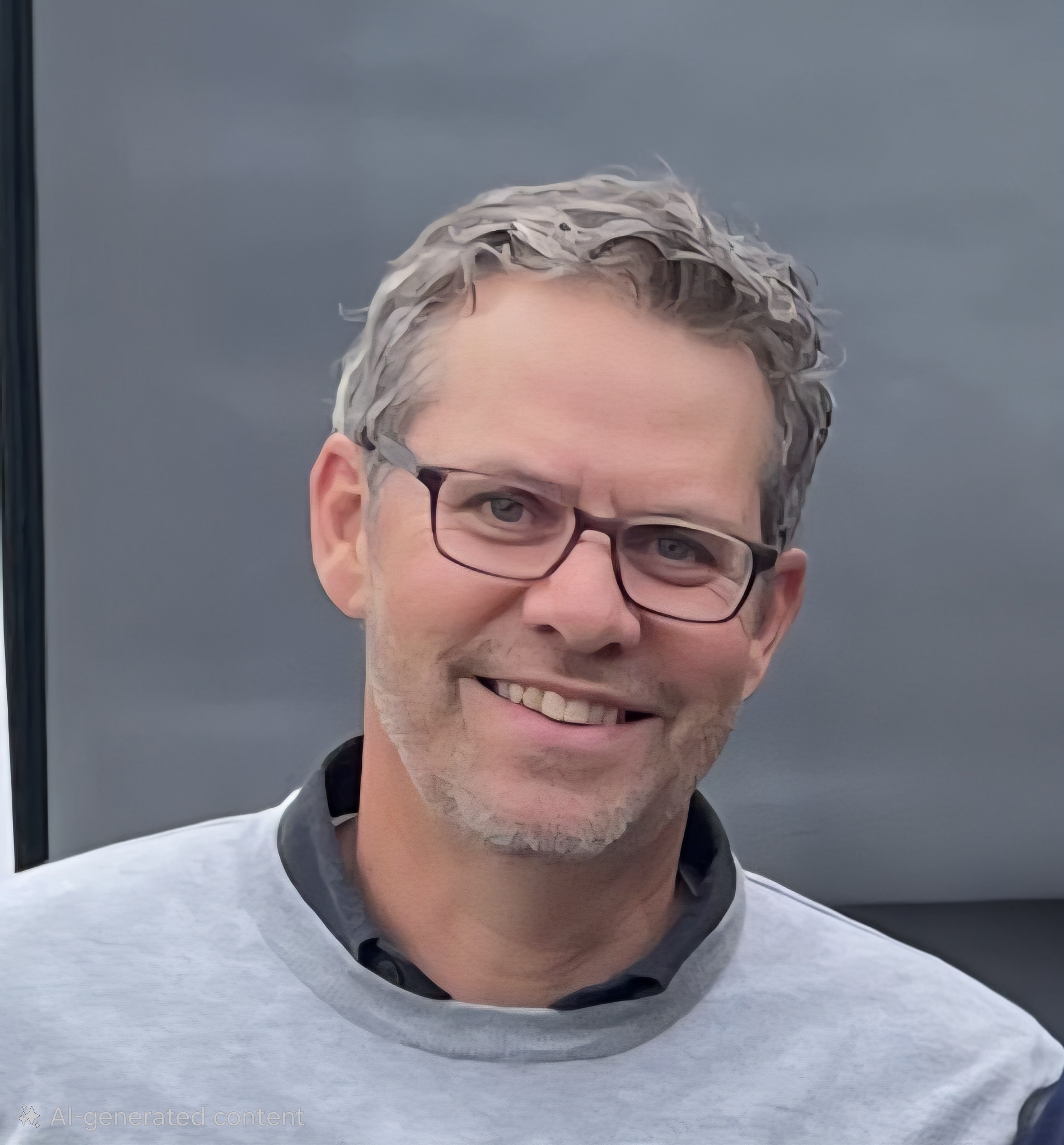
Brian Farmer, CEO, Inipharm
Brian Farmer has spent more than three decades in healthcare and biopharmaceuticals, with a career spanning early-stage biotech, venture-backed drug development, public health, managed care, and large pharma. After beginning his career at Eli Lilly and later serving as an entrepreneur-in-residence at Frazier Life Sciences, he co-founded Inipharm and has led the company as CEO since 2020. Inipharm is a clinical-stage biopharmaceutical company developing small-molecule therapies for severe liver disease, with its lead program targeting HSD17B13, a genetic target with strong human validation for reducing the risk and severity of liver disease progression. Its lead candidate, INI-822, is an oral, once-daily inhibitor currently in clinical development for MASH.
In this Q&A, Farmer discusses the genetic discovery that inspired Inipharm's approach, why an oral small-molecule strategy sets the company apart from RNA-based competitors, early clinical signals behind INI-822, the field's shift away from invasive biopsy endpoints, and what it takes to build a small team capable of advancing a novel drug target.
August 17, 2026
Your Story
Q1. What was the defining moment or insight that led you to take the helm of Inipharm?
The seminal moment for our work was the publication of a rigorous genetic association study by Regeneron demonstrating the therapeutic promise of targeting HSD17B13. That research, along with subsequent studies, showed that people carrying specific loss-of-function variants of this gene experience a 60% or greater reduction in the risk of progressing to advanced stages of liver disease, including fibrosis, cirrhosis, and hepatocellular carcinoma, in conditions such as MASH.
The magnitude and consistency of this protective effect, since validated across numerous independent studies, gave us a compelling scientific rationale. It positioned HSD17B13 as a potentially transformative approach to treating MASH by directly addressing the drivers of disease progression.
Q2. In the simplest terms, what does Inipharm do, and why does it matter for patients?
Inipharm is developing a treatment for MASH, a serious liver disease that develops when fat buildup in the liver triggers inflammation that can progress to fibrosis, cirrhosis, liver cancer, and the need for a liver transplant. We've developed an oral, once-daily small molecule that inhibits HSD17B13, a well-validated liver disease target, with the goal of reversing MASH progression.
Treatment options for MASH remain limited. Companies struggled for years to succeed in this disease area, and recently approved therapies, including a GLP-1 agonist, have finally given patients options. But significant unmet need remains. Many patients carry genetic risk factors that can accelerate disease progression, and GLP-1 agonists have shown less impact on liver fibrosis in that population. Many therapies in development also require injections. We see a clear need for a treatment that is oral, well-tolerated, and meaningfully reduces liver fibrosis across the broad range of patients MASH affects, including those with genetic risk factors that drive faster progression.
The Science & The Strategy
Q3. What sets Inipharm's approach apart from others working in this space?
Our pursuit of a small-molecule inhibitor of HSD17B13 is a significant differentiator in MASH drug development. Large, consistent genetic datasets show that certain variants of HSD17B13 meaningfully reduce the risk of liver disease progression, which gives us confidence that inhibiting the protein's activity will translate into patient benefit.
We're also the first, and we believe only, small-molecule inhibitor of HSD17B13 in clinical development. The approach others are using relies on RNAi, which requires injection and works by eliminating the protein entirely. An oral therapeutic is easier for patients to use and simpler and lower-cost to manufacture. Because our inhibitor doesn't eliminate the protein, we also believe it more closely mimics the natural protection seen in people who carry the protective genetic variant, unlike RNA-based approaches designed to remove the protein altogether.
Q4. What has been your most important milestone to date, and what's next?
One of our most important milestones has been the successful completion of a portion of a Phase 1 study in patients with MASH, designed to evaluate both target engagement and disease-relevant biomarkers. Even with a relatively short, 28-day dosing period, we saw meaningful improvements across several biomarkers, including one that reflects hepatocyte injury and cell death, a key driver of MASH progression from simple fat accumulation to inflammation, fibrosis, and eventually cirrhosis.
The results also suggested our drug is producing biologic changes, such as improved lipid profiles, consistent with what's seen both in people who carry protective HSD17B13 variants and in our preclinical animal models. These findings were encouraging enough to support advancing into a longer, 12-week study that will let us further evaluate MASH-specific endpoints and establish proof of concept for INI-822.
Q5. What is the biggest challenge you're facing right now, and how are you tackling it?
Our biggest challenge today is increasing clinical awareness and adoption in the United States while simultaneously supporting product launches across the UK, EU, and Asia. Successfully addressing this requires continued scientific education, strong clinical partnerships, and scalable operational infrastructure — all of which we are investing in in parallel.
One of the biggest challenges in MASH drug development is the field's continued reliance on liver biopsy endpoints for FDA approval. MASH is common and serious, which has attracted substantial development activity, but biopsies come with real limitations. For patients, they're invasive and burdensome, and rarely used in routine clinical practice. In trials, they introduce significant variability in sampling and interpretation, creating a noisy endpoint that requires larger, longer, and more expensive studies to detect a real treatment effect.
There's strong momentum across the field to shift toward non-invasive endpoints, such as advanced imaging and blood-based biomarkers, which are increasingly supported by evidence showing good correlation with biopsy results. We're actively aligning with that shift. Adopting non-invasive endpoints could make trials easier for patients and faster and more efficient to run, while allowing earlier-stage studies, like our current 12-week trial, to evaluate endpoints relevant to future regulatory approval and potentially accelerate the path to effective therapies.
Leadership & Ecosystem
Q6. How would you describe the culture you're building, and why does it matter for the science?
As a small company, we've taken on a novel target that's proven difficult to address, even for much larger organizations, and a few aspects of our culture have made that possible. First, advancing a novel target into the clinic with a small team requires people who are experienced, versatile, and comfortable solving problems creatively. Everyone on our team takes on broad responsibility and contributes across multiple areas.
Equally important is our emphasis on open dialogue. We encourage debate, even disagreement, while expecting people to stay open to changing their views as new data emerges, so decisions stay grounded in evidence rather than assumption. We also place a strong value on thoughtful risk-taking and on challenging established dogma when the science supports it, a mindset that's critical in areas where conventional approaches have fallen short. Together, these elements create an environment built for rigorous scientific thinking and innovation.
Q7. What role does your region's life sciences ecosystem play in Inipharm's growth?
Our team is spread across the West Coast, which has let us tap into several leading biotech hubs, including San Diego, the Bay Area, and Seattle. That geographic flexibility has been a real advantage in building the company. As a small organization, every hire matters, and drawing from these established hubs has let us recruit highly experienced employees and engage top-tier consultants and collaborators. That access to deep talent pools lets us operate with the expertise and execution quality of a much larger company, while staying small and capital-efficient.
Looking Ahead
Q8. Where do you see Inipharm in three years, and what will have to go right to get there?
Right now, we're focused on advancing INI-822 and bringing it to patients who have limited treatment options today. Assuming we continue to generate promising clinical data, we expect that in three years we could be completing a Phase 2b study and preparing to initiate pivotal Phase 3 trials. As we progress, we'll need to expand our team and build the additional capabilities that later-stage development requires.
Q9. What is one thing about the life sciences industry you'd change if you could, and what gives you optimism despite it?
This is an incredibly rewarding industry, so there isn't much I'd change. There's a common perception that life sciences is "boom or bust." It's true that fundraising is easier in some periods and much harder in others, but I believe opportunity exists for well-run companies with compelling science that can genuinely help patients.
In nearly 25 years in biopharma, I've lived through multiple cycles, and that pattern has held consistently. There will be ups and downs, but opportunity continues to exist for teams grounded in rigorous science and focused on meaningful clinical impact.
About The Big4Bio CEO Weekly Q&A
Every Monday, Big4Bio spotlights a life sciences CEO from one of our eight coverage regions — Boston, San Francisco Bay Area, San Diego, Philadelphia, New York City, the Capital Region, Los Angeles, and Seattle. Each feature is promoted across all eight Big4Bio daily newsletters, reaching 30,000+ life sciences professionals. CEO participation is complimentary and editorial — every CEO approves the final Q&A before publication.
Are you a life sciences CEO or do you represent one? Contact Big4Bio editor Marie Daghlian at marie@big4bio.com to be considered for an upcoming feature.