
Todd Dickinson, President & CEO, Stellaromics
Todd Dickinson has spent more than two decades at the forefront of genomics — from the early days of microarrays at Illumina through the rise of next-generation and single-cell sequencing at Bionano Genomics and Dovetail Genomics. Now, as President and CEO of Stellaromics, he is leading what he sees as the field’s next major inflection point: the move from two-dimensional tissue analysis to true three-dimensional spatial multi-omics. Spun out of the laboratories of Karl Deisseroth at Stanford and Xiao Wang at MIT and the Broad Institute, Stellaromics is built on STARmap technology, enabling researchers to study biology not as a flattened snapshot, but as it actually exists — in depth, in context, and at subcellular resolution.
In this Q&A, Dickinson explains why conventional spatial platforms lose critical biological information by cutting tissue too thin, how Stellaromics’ Pyxa® platform preserves native tissue architecture in sections up to 100 microns thick, and what that means for drug discovery, tumor biology, and ultimately patient care. He also speaks candidly about the realities of leading an early-stage tools company in a constrained funding environment, the culture he is building in Boston, and why — despite growing political headwinds facing science — he remains genuinely optimistic about the longer arc of progress.
August 3, 2026

Your Story
Q1. What was the defining moment or insight that led you to take the helm of Stellaromics?
My career has tracked the successive leaps in genomics technology — microarrays, next-generation sequencing, single-cell sequencing — and each of those leaps addressed a critical unmet need for the scientific community. Spatial transcriptomics was born from the realization that to truly understand biology, you need to know not only which genes are active, but where the cells expressing them are in relation to each other.
The platforms that emerged earlier this decade attempted to solve that problem by slicing tissue into sections just 5 to 10 microns thick — thin enough to image, but also thin enough to destroy a significant portion of the cells and sever the vertical relationships between them. When Stellaromics approached me and shared their vision for the Pyxa® platform, the logic was immediate: biology happens in 3D, but the field was still studying it in 2D. Pyxa leverages STARmap technology to detect RNA transcripts at subcellular resolution in tissue sections up to 100 microns thick — roughly twenty times the industry standard — preserving the native structure of the sample. I saw the opportunity to lead a genuine paradigm shift, and that is not something you pass on.
Q2. In plain terms, what does Stellaromics do — and why does it matter for patients?
We build tools that let scientists study biology the way it actually exists: in three dimensions, with full structural context, at the level of individual cells. Conventional spatial platforms are limited to very thin tissue slices, which means they capture only partial cell layers and lose the vertical relationships that define how tissues are organized. Our Pyxa platform works with intact, thick tissue sections and maps where RNA transcripts are located within the native architecture of the sample — not a reconstruction, not an approximation, but the real structure.
For patients, the downstream implications are significant. In oncology, for example, we can map the immune landscape within the tumor microenvironment in three dimensions, identifying the spatial relationships between tumor, immune, and stromal cells that predict which patients will respond to a given therapy. We can detect rare, resistant cell populations before they reach clinical dominance, enabling earlier intervention. In drug development, Pyxa can quantify exactly where a therapy distributes within target tissue and whether it is reaching its intended cells. These are questions that 2D platforms simply cannot answer with the same fidelity — and the answers have real consequences for which treatments get developed, and for whom.
The Science & The Strategy
Q3. What sets Pyxa® apart from others working in spatial omics?
The core distinction is that Pyxa preserves the native biological structure of tissue rather than sacrificing it for the sake of imaging. Conventional platforms work with sections of 5 to 10 microns — thin enough to result in substantial loss of cell morphology and the vertical relationships between cells. Even when researchers attempt to reconstruct three-dimensional tissue from serial sections, they are working computationally around the cell layers that were physically destroyed during sectioning. You are approximating what was there, not measuring it.
Pyxa captures multiple intact cell layers within a single tissue volume, eliminating that inference step and delivering a genuinely comprehensive spatial picture. That has concrete scientific consequences. In cell and gene therapy studies, for instance, sectioning bias can cause rare edited cell populations to be missed entirely — a meaningful problem when the therapeutic effect depends on detecting those cells. In the tumor microenvironment, immune niches that play a pivotal role in patient prognosis can only be accurately characterized when their three-dimensional architecture is intact. We have also used Pyxa to visualize structures like vasculature and neuronal networks in 3D and, in Alzheimer’s disease research, to quantitatively map cell populations adjacent to amyloid beta plaques. These are not incremental improvements on existing approaches — they are analyses that were not previously possible.
Q4. What has been your most important milestone to date, and what comes next?
The commercial launch of the Pyxa instrument in February was a landmark moment — the first commercially available platform capable of delivering multiplexed 3D spatial transcriptomics in intact tissue sections up to 100 microns thick. Researchers are already using it to map neural connectomics, track tumor progression, characterize cell–cell interactions, and validate organoid morphology. Moving from academic spinout to a commercially launched instrument is a real inflection point for a company.
The next major milestone is the commercialization of our RIBOmap assay later this year. RIBOmap maps active protein translation at the single-cell level in 3D by detecting ribosome-bound mRNA — a proxy for which proteins are actually being produced, rather than simply which transcripts or total proteins are present. That concept, known as translatomics, fills a meaningful gap between transcriptomic and proteomic measurement. We have observed strong correlation between RIBOmap data and established ribosome profiling and proteome datasets in matched cell types, which gives us confidence in its biological validity. When it launches, it will extend our platform’s capability into a data type no other spatial tool currently provides.
Q5. What is the biggest challenge you are facing right now, and how are you tackling it?
The contraction in research funding is creating real friction for life sciences tools companies. When institutional budgets tighten, capital equipment is often the first thing to be deferred, and that limits scientists’ access to the technologies they need to do their best work.
We are responding on several fronts. We have established Technology Access Services that allow researchers to run their samples on Pyxa without requiring an instrument purchase, and we are actively connecting institutions that have Pyxa instruments with groups that do not. We are also supporting researchers in their instrumentation grant applications by contributing proof-of-concept data that strengthens the scientific rationale for funding. The goal is to ensure that access to Pyxa is not constrained by capital availability — because the science that depends on it is too important to wait.
Leadership & Ecosystem
Q6. What has surprised you most about being a CEO in life sciences?
I always suspected it, but becoming one confirmed it: being the CEO of an early-stage life sciences company is remarkably unglamorous. You are making the decisions that set the company’s direction, yes — but you are also in the trenches with the team every day, working through surprises and the on-the-ground realities that make a company actually function. I would not trade any of it.
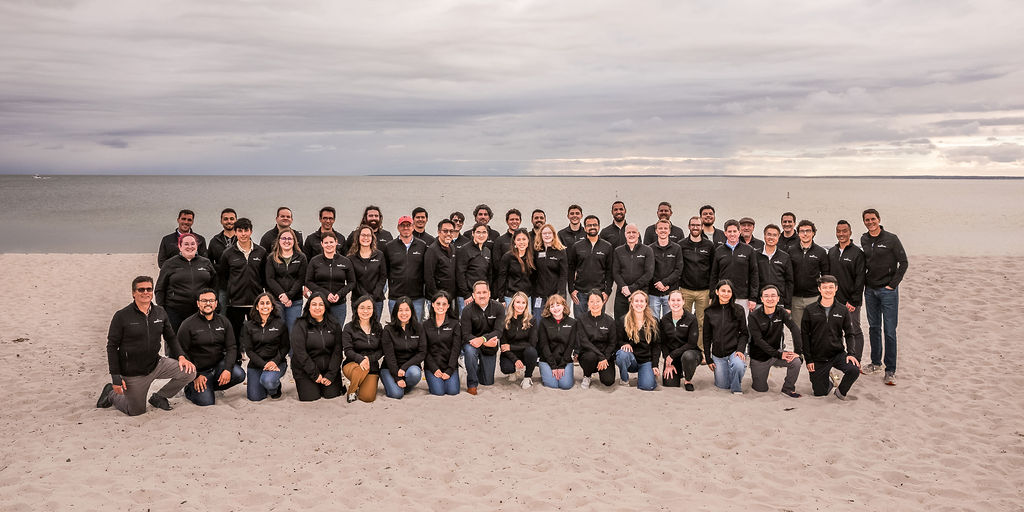
The two things you hear most from early-stage CEOs are that the workload is relentless and that it is a lonely job. The first is entirely true — as CEO, you are always on, without exception. But on the second, I have been genuinely surprised by how rarely I feel isolated, and I attribute that entirely to the leadership team I have built. They are people I trust completely and can speak with openly. That makes an enormous difference.
Q7. How would you describe the culture you are building at Stellaromics?
We are building a culture rooted in innovation, agility, and genuine collaboration — one where bold ideas are the primary engine of progress and where diverse, motivated people are empowered to work toward a shared purpose. That environment is not incidental to the science; it is essential to it.
Transforming the way researchers visualize and understand biological systems requires a willingness to challenge assumptions, move quickly when the science demands it, and operate without the kind of internal friction that slows teams down. We are a company built on technology that did not exist in its current form a few years ago. The culture has to match that pace.
Q8. What makes Boston the right home base for Stellaromics?
Boston is one of the most extraordinary places in the world to build a life sciences company, and for Stellaromics specifically, it is a natural fit. The density of world-class research institutions creates an ecosystem where cutting-edge science and commercial innovation exist in genuine dialogue. For a platform technology like Pyxa, being embedded in that research community means our conversations with scientists are not just commercial conversations — they are ongoing collaborations that shape how we develop and refine our tools. That proximity matters enormously.
Boston also provides access to exceptional talent and an investor community with a strong track record of supporting deep-technology life sciences companies, which is exactly what tools companies like ours need. Our San Diego office extends that reach into another major hub with a strong biopharma and genomics presence, and the talent pool there has meaningfully strengthened the team.
Looking Ahead
Q9. Where do you see Stellaromics in three years?
Over the next three years, I expect Pyxa to make the transition from a tool primarily used for exploratory research to one that is actively informing patient care. As the spatial omics field matures, the ability to map drug distribution, gene expression, and cellular architecture at subcellular resolution in 3D will become essential for validating therapeutic mechanisms of action — particularly in cell and gene therapy, where knowing exactly which cells have been edited, and where they are in the tissue, is clinically meaningful.
The longer-term vision is a shift from 2D snapshots to comprehensive 3D disease atlases that give researchers the contextual data they need to identify novel biomarkers and guide complex treatment decisions. That is how spatial multi-omics becomes embedded in the standard of care rather than remaining a research instrument. We see Pyxa as foundational infrastructure for that transition.
Q10. What would you change about the life sciences industry today — and what gives you optimism?
As the CEO of a tools company, I would like to see more investors engage seriously with tools plays. Tools companies often struggle to attract sufficient capital despite enabling the discoveries that the rest of the industry depends on. The past two years have been particularly difficult — and part of what has driven that difficulty is the growing politicization of science in the United States: the erosion of trust in leading institutions, destabilization of research funding, and an environment in which misinformation about science has proliferated far too easily.
Despite all of that, I believe deeply that reason, evidence, and scientific rigor will prevail. History is cyclical, and the longer arc points toward progress. I also find a great deal of optimism in focusing on what I can control: building things that matter, with people who are genuinely driven to make a difference. That combination — meaningful work and the right team — is hard to stay pessimistic around.
About The Big4Bio CEO Weekly Q&A
Every Monday, Big4Bio spotlights a life sciences CEO from one of our eight coverage regions — Boston, San Francisco Bay Area, San Diego, Philadelphia, New York City, the Capital Region, Los Angeles, and Seattle. Each feature is promoted across all eight Big4Bio daily newsletters, reaching 30,000+ life sciences professionals. CEO participation is complimentary and editorial — every CEO approves the final Q&A before publication.
Are you a life sciences CEO or do you represent one? Contact Big4Bio editor Marie Daghlian at marie@big4bio.com to be considered for an upcoming feature.