
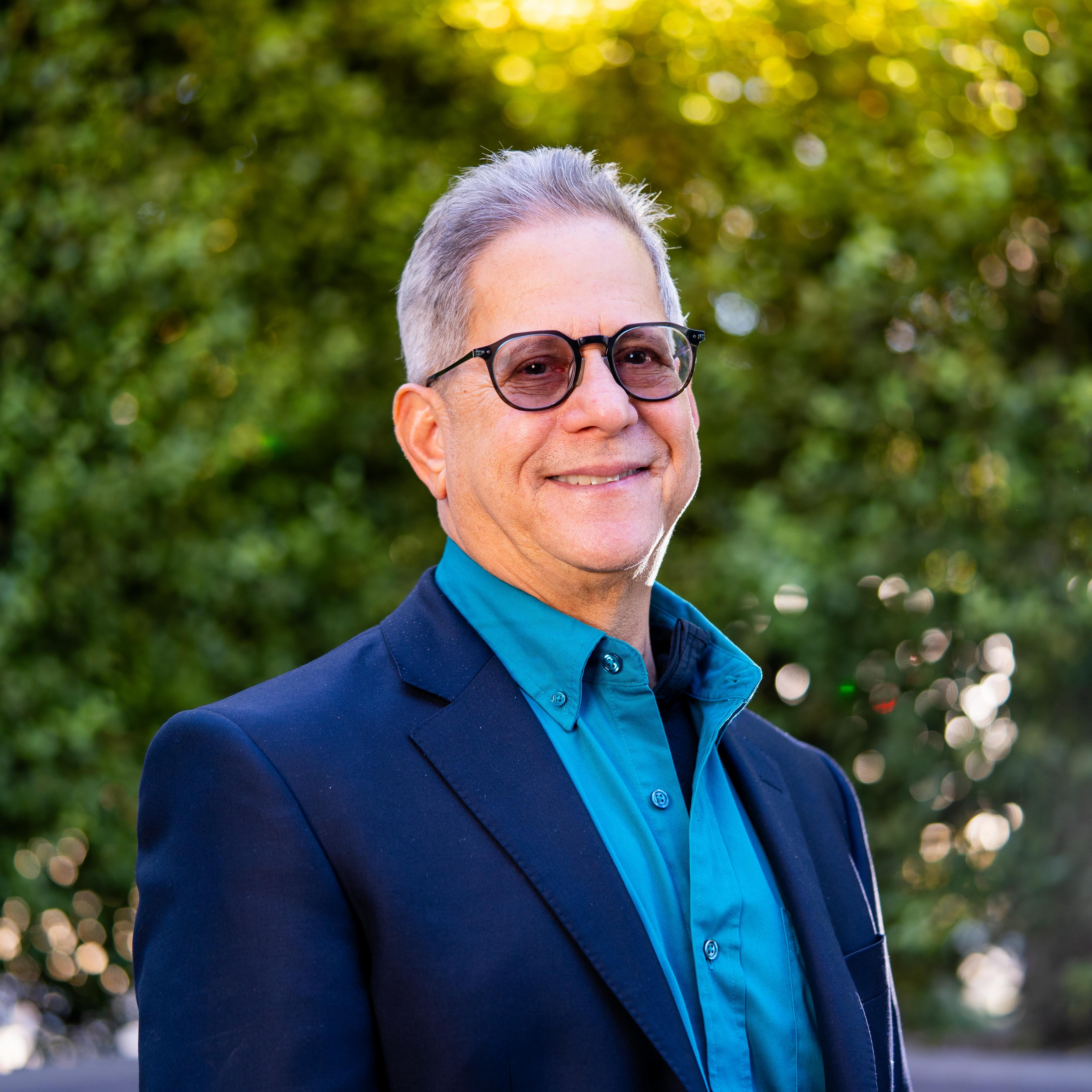
Russ Lebovitz, CEO, Amprion
For decades, diseases like Parkinson’s, Lewy body dementia, and Alzheimer’s could only be confirmed with certainty after a patient had died. Amprion is working to change that. The San Diego- and Bay Area–based diagnostics company has developed proprietary technology to detect toxic, misfolded proteins — the biological signatures underlying many neurodegenerative diseases — directly from patient samples, enabling earlier and more accurate diagnosis during life.
In this Q&A, Amprion’s CEO reflects on the origin of the company, what sets its platform apart, the milestones that matter most, and the regulatory headwinds that challenge the entire life sciences field. He also shares a philosophy of leadership grounded in collaboration, humility, and an unwavering focus on patients.
August 10, 2026
Your Story
Q1. What was the defining moment or insight that led you to start — or take the helm of — your company?
The defining moment came from meeting an established scientist with a novel but still unproven technology that addressed a newly recognized mechanism underlying chronic neurological diseases. The potential patient impact was enormous, though the scientific and execution risks were equally significant. Fortunately, those early risks could be managed through research grant support, giving us the runway to further validate and develop the technology before taking it to market.
Q2. In the simplest terms, what does your company do — and why does it matter for patients?
At Amprion, we develop advanced diagnostic tests that detect toxic, misfolded proteins linked to neurodegenerative diseases such as Parkinson’s disease, Lewy body dementia, Alzheimer’s disease, and related disorders.
For decades, many of these conditions could only be definitively confirmed after a patient had died, making accurate diagnosis during life difficult and often uncertain. Our technology is designed to identify the underlying biology of disease earlier and more accurately by detecting abnormal protein activity directly in patient samples.
Why does this matter? Because patients and families deserve clearer answers sooner. More accurate diagnosis can reduce years of uncertainty, improve clinical decision-making, and strengthen drug development by ensuring the right patients are enrolled in clinical trials. Ultimately, our goal is to help move neurodegenerative disease care toward the same kind of biology-based precision medicine that has transformed oncology.
The Science & The Strategy
Q3. What sets your platform apart from others working in this space?
We have developed proprietary methodologies to detect toxic forms of misfolded proteins that are capable of self-replicating outside of cells. This characteristic makes our technology uniquely suited for detecting and studying protein-misfolding diseases — including Alzheimer’s disease, Parkinson’s disease, Lewy body dementia, frontotemporal dementia, ALS, and related neurodegenerative disorders — in a way that more generic approaches cannot replicate.
Q4. What has been your most important milestone to date, and what’s the next one you’re working toward?
One of our most important milestones has been independent validation of our technology by organizations including Mayo Clinic Laboratories, major pharmaceutical companies, and The Michael J. Fox Foundation. Third-party validation of this caliber builds credibility and accelerates clinical adoption in ways that internal data alone cannot.
Looking ahead, we are focused on launching new products designed to detect Parkinson’s disease, Lewy body dementia, Alzheimer’s disease with Lewy body pathology, and multiple system atrophy — using both cerebrospinal fluid (CSF) and minimally invasive skin punch biopsies. Expanding the menu of conditions we can identify, and the range of sample types we can work with, is central to our next phase of growth.
Q5. What is the biggest challenge you’re facing right now, and how are you tackling it?
Our biggest challenge today is increasing clinical awareness and adoption in the United States while simultaneously supporting product launches across the UK, EU, and Asia. Successfully addressing this requires continued scientific education, strong clinical partnerships, and scalable operational infrastructure — all of which we are investing in in parallel.
Leadership & Ecosystem
Q6. What has surprised you most about being a CEO in life sciences?
One of the most important things I’ve learned is that the best advice most often comes from your internal team rather than from external sources. Company resilience and innovation ultimately depend on building a well-supported, highly collaborative, and thoughtfully mentored team. That insight surprised me in the best way — and it has shaped how I lead.
Q7. How would you describe the culture you’re building at Amprion, and why does it matter for the science?
We have built a culture grounded in respect — for patients and families, clinicians, business partners, vendors, and one another. Scientific progress can come from many different perspectives, and some of the best ideas and practices emerge when organizations listen carefully and collaborate openly. That culture isn’t separate from our science; it’s what makes the science possible.
Q8. What role does your region’s life sciences ecosystem play in your company’s growth?
We operate across both the Bay Area and San Diego, and each ecosystem offers distinct advantages. The Bay Area provides exceptional depth in technology, business strategy, and entrepreneurship. San Diego offers a highly concentrated environment for cutting-edge biotech innovation, with strong academic and industry networks. Together, these two ecosystems have been invaluable to our growth — and to our ability to attract the talent and partnerships we need.
Looking Ahead
Q9. Where do you see Amprion in three years, and what will have to go right to get there?
We measure our progress by the number of people we are able to help in a meaningful way. Over the next three years, we aim to increase the number of patients effectively served in the United States by three- to four-fold, while also rapidly expanding access internationally. Achieving this will require continued scientific validation, strong operational execution, and broader clinical adoption — each of which we are working on every day.
Q10. What is one thing about the life sciences industry you would change if you could — and what gives you optimism despite it?
The regulatory landscape — including government approvals, reimbursement processes, marketing regulations, and inconsistent international requirements — is often unwieldy, slow, and extremely expensive to navigate. As a result, success for innovative diagnostics and therapies can depend more on access to large amounts of capital than on the actual value delivered to patients. That imbalance is something the industry urgently needs to address.
At the same time, I remain optimistic. The pace of scientific discovery and technological advancement continues to accelerate, creating new opportunities to improve diagnosis, treatment, and patient outcomes in ways that were not possible even a decade ago. The potential to help patients has never been greater — and that is what drives us.
About The Big4Bio CEO Weekly Q&A
Every Monday, Big4Bio spotlights a life sciences CEO from one of our eight coverage regions — Boston, San Francisco Bay Area, San Diego, Philadelphia, New York City, the Capital Region, Los Angeles, and Seattle. Each feature is promoted across all eight Big4Bio daily newsletters, reaching 30,000+ life sciences professionals. CEO participation is complimentary and editorial — every CEO approves the final Q&A before publication.
Are you a life sciences CEO or do you represent one? Contact Big4Bio editor Marie Daghlian at marie@big4bio.com to be considered for an upcoming feature.