
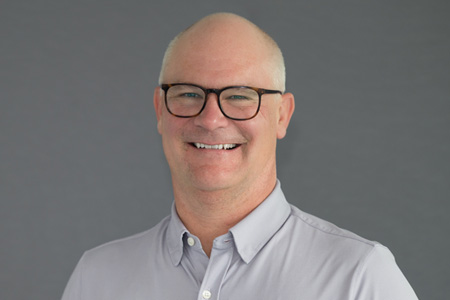
Jason Cole, CEO and Board Member, Zag Bio, Inc.
Jason Cole is Chief Executive Officer and a board member of Zag Bio, Inc., where he leads the company’s effort to treat and prevent autoimmune disease by restoring the immune system’s natural tolerance. He has 20 years of executive experience in biotechnology, including as CEO and Chair of the Board at SalioGen Therapeutics, and prior senior executive roles at bluebird bio, Zalicus, and CombinatoRx. He holds a J.D. from Columbia University and an A.B. in Government from Dartmouth College, and serves as Vice Chair of the board of MassBIO.
In this week’s Big4Bio CEO Q&A, Cole, who lives with type 1 diabetes himself, discusses the scientific breakthrough behind Zag’s thymus-targeted platform, what differentiates the company’s approach from other immune-tolerance strategies in development, the milestones ahead as Zag’s lead program moves toward the clinic, and his outlook for turning immune tolerance from a long-standing scientific aspiration into real therapies for patients.
August 24, 2026
Your Story
Q1. What was the defining moment or insight that led you to take the helm of Zag Bio?
Zag Bio was built around a scientific breakthrough: the thymus, the organ that teaches the immune system what belongs in the body and what doesn’t, has long been largely inaccessible to medicines. Our founding team developed a novel way to target the thymus therapeutically, creating an opportunity to harness the body’s natural process of central immune tolerance to treat autoimmune disease.
For decades, most autoimmune treatments have focused on suppressing an overactive immune system rather than addressing the underlying loss of tolerance that causes disease. Those therapies help many patients, but they often require lifelong treatment, leave people vulnerable to infection, and don’t work for everyone. Restoring the immune system’s ability to distinguish self from non-self, rather than simply dampening it, is a fundamentally different approach.
I joined Zag a year ago, shortly after the company launched publicly with $80 million in Series A financing led by Polaris Partners and the T1D Fund. As someone who lives with type 1 diabetes myself, leading Zag was a chance to bring my experience in biotech and drug development to bear on preventing the disease for future generations. At every company I’ve led, we’ve worked to bring patient and caregiver perspectives into the building, so the team stays connected to who we’re trying to help. The combination of groundbreaking science, a strong team and investor syndicate, and the chance to help patients made this an opportunity I couldn’t pass up.
Q2. In the simplest terms, what does Zag Bio do, and why does it matter for patients?
At Zag Bio, we’re developing medicines designed to teach the immune system to stop attacking the body’s own tissues. Rather than broadly suppressing the immune system, we’re harnessing the thymus, the organ where immune cells are trained, to restore immune tolerance in a targeted way. If we succeed, we believe we can move beyond managing symptoms and toward therapies that preserve healthy tissue and change the course of autoimmune disease.
Our lead program targets type 1 diabetes (T1D), which affects more than 9.5 million people worldwide, including about 1.5 million in the United States. In T1D, the immune system mistakenly destroys the insulin-producing beta cells in the pancreas, leaving patients dependent on lifelong insulin therapy. Better glucose monitors and insulin delivery systems have made the disease easier to manage, but they don’t address the underlying autoimmune process, and many patients still face complications like heart disease, kidney failure, and vision loss.
Our goal is to change that trajectory. By restoring immune tolerance, we aim to preserve the body’s insulin-producing cells and stop the autoimmune attack that drives disease progression. If successful, our approach could help patients maintain their own insulin production longer, or even prevent T1D altogether. More broadly, we hope to show that retraining the immune system, rather than suppressing it, can offer a new path to disease-modifying therapies across autoimmune disease. For patients and families, that could mean a lighter daily burden, less fear of future complications, and the freedom to live without the disease defining every decision.
The Science & The Strategy
Q3. What sets your platform apart from others working in this space?
What sets Zag Bio apart is that we target autoimmune disease at its source by leveraging the biology of the thymus to induce central immune tolerance. Most autoimmune therapies intervene after disease has developed; we’re part of a new wave of companies working to restore tolerance by acting on the thymus itself, the organ that teaches T cells what to attack and what to ignore.
We use thymus-targeted bifunctional antibodies to generate new, antigen-specific regulatory T cells in the body, designed to protect specific tissues without broadly suppressing the immune system. We believe this approach can deliver greater precision, durability, and safety than existing therapies by harnessing the body’s own mechanisms for immune tolerance.
The platform is also designed to be broadly applicable. Rather than building a new therapeutic modality for every indication, we’ve built an antibody platform around a common mechanism of central immune tolerance and simply tailor the antigen component to each disease’s biology. That gives us a path to a pipeline of disease-modifying therapies, starting with ZAG-101 in type 1 diabetes, with additional programs advancing in diseases like ulcerative colitis and rheumatoid arthritis. Immune tolerance has long been one of the great aspirations in immunology, and we believe advances in thymic biology and antibody engineering finally make it possible to translate that vision into real therapies.
Q4. How is Zag different from other companies pursuing immune tolerance, including those with Treg therapies already in the clinic?
Immune tolerance has been an aspiration in the autoimmune disease field for years, and a number of companies are working to advance therapies in this space, including regulatory T cell (Treg) therapies engineered ex vivo. Zag’s approach is differentiated in at least two ways. First, we use antibodies as our platform technology, a simpler and more scalable approach than cell therapies or nanoparticles currently in the clinic. Second, by generating antigen-specific Tregs in vivo from their natural source, the thymus, we can leverage the inherent durability of Tregs and their capacity for bystander suppression, which we believe could result in more potent, longer-lasting remission of autoimmune conditions.
Q5. What has been your most important milestone to date, and what’s next?
Launching Zag Bio with $80 million in financing and an outstanding syndicate of investors was a significant milestone. It validated our scientific vision and gave us the resources to advance our thymus-targeted platform and lead program into the clinic.
Our next major milestone is initiating the first-in-human clinical study of ZAG-101 in people with type 1 diabetes. That study will begin to establish the safety, pharmacokinetic, and pharmacodynamic profile of ZAG-101, inform dose selection, and give us our first opportunity to understand efficacy in patients. We anticipate initiating the study in late 2026.
Q6. What’s the biggest challenge you’re facing right now, and how are you tackling it?
Like any company advancing a first-in-class therapy, our key challenge is translating compelling biology into clinical results. For us, that means establishing the right dose, route of administration, and pharmacodynamic profile in patients while generating evidence that we’re engaging our intended mechanism. We’ve built our clinical and biomarker strategy specifically to answer those questions as efficiently and rigorously as possible, and we look forward to entering the clinic later this year.
Leadership & Ecosystem
Q7. What has surprised you most about being a CEO in life sciences?
I was told it can be a lonely, stressful job, and I’ve seen elements of that with CEOs I’ve worked with over the years. What’s been a pleasant surprise is that there are vibrant biotech CEO networks out there, especially here in the Boston ecosystem, where you can exchange ideas, learn about resources, and think through common problems. Because the job can be isolating, many fellow CEOs are looking for that same kind of support network, and I’ve been struck by how generous very busy people can be when asked.
Q8. How would you describe the culture you’re building at Zag, and why does that matter for the science?
I’m proud of the culture we’re building at Zag. It starts with a shared sense of purpose. We’re advancing hard science, and there will be setbacks along the way; that’s the nature of building first-in-class medicines. So it matters to have a team that’s curious, resilient, and willing to challenge assumptions, but that never loses sight of why we’re doing the work: to help patients and their families.
One moment that captured that for me was when we brought in a founder of an apparel company who has lived with type 1 diabetes for more than 45 years to speak with our team. On the surface, an apparel company and a biotech startup couldn’t be more different, but as he shared his story, it was clear we’re motivated by many of the same things: perseverance, purpose, and a commitment to making life better for people living with this disease.
Building a successful biotech company takes both great science and staying connected to the people you’re trying to help. We spend most of our time talking about the drug development path, but conversations like that remind us that every advance has the potential to change someone’s life, and that perspective makes us better scientists and colleagues.
Looking Ahead
Q9. Where do you see Zag Bio in three years, and what will have to go right to get there?
In three years, we aim to have generated meaningful clinical data for ZAG-101 and advanced additional programs from our platform into clinical development. Getting there will require strong execution, continued scientific validation, and maintaining the focus that’s allowed us to build the company so far. Ultimately, our goal is to establish thymus-targeted therapies as a new way to treat autoimmune disease. We will, of course, need funding and partnerships to get there.
Q10. What is one thing about the life sciences industry you’d change, and what gives you optimism despite it?
I wish the pathways to generating first-in-human clinical data in the US were faster. Our current approach to early clinical development puts US science and companies at a disadvantage compared to companies studying their therapies in China, where clinical data can be generated more easily. It forces companies like Zag to defer US-based clinical sites and activities. There are efforts underway to streamline the IND process in the US and make it qualitatively better, and I’m optimistic about that work, but it needs to move faster.
About The Big4Bio CEO Weekly Q&A
Every Monday, Big4Bio spotlights a life sciences CEO from one of our eight coverage regions — Boston, San Francisco Bay Area, San Diego, Philadelphia, New York City, the Capital Region, Los Angeles, and Seattle. Each feature is promoted across all eight Big4Bio daily newsletters, reaching 30,000+ life sciences professionals. CEO participation is complimentary and editorial — every CEO approves the final Q&A before publication.
Are you a life sciences CEO or do you represent one? Contact Big4Bio editor Marie Daghlian at marie@big4bio.com to be considered for an upcoming feature.