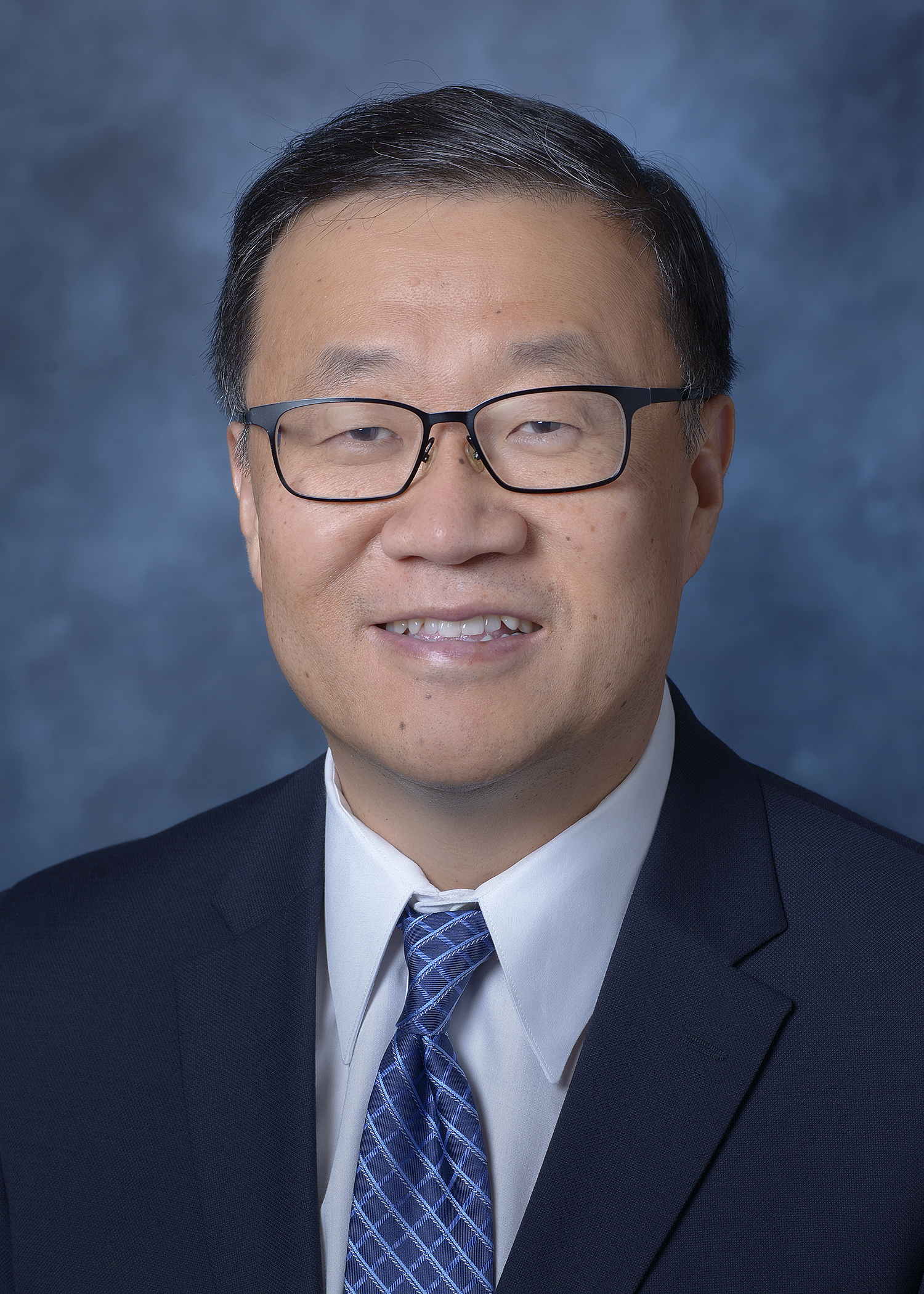
Dr. John Yu, MD, CEO and Chairman, Kairos Pharma
Dr. John Yu, MD is CEO and Chairman of Kairos Pharma, a clinical-stage biotechnology company based in Los Angeles developing targeted therapeutics to combat cancer drug resistance — a fundamental barrier to curing solid tumors. Yu is also a Professor of Neurosurgery and Director of Surgical Neuro-Oncology at Cedars-Sinai Medical Center. He holds a BAS from Stanford University and an MD from Harvard Medical School and MIT, completed his neurosurgery residency at Massachusetts General Hospital/Harvard, and completed an immunology fellowship at the Institut Pasteur in Paris. Over his career he has developed eight FDA investigational drugs and holds numerous patents in immunotherapy and nanotechnology.
Kairos's lead candidate, ENV-105, targets CD-105, a protein that drives cancer cells into a treatment-resistant state, and is currently advancing through a Phase 2 trial in prostate cancer and a Phase 1 trial in non-small cell lung cancer. In this Big4Bio CEO Q&A, Yu discusses the company's founding, the science behind its approach to drug resistance, recent milestones including its 2024 IPO and a new strategic collaboration with Bayer, and his outlook on the challenges facing biotech funding today.
September 21, 2026
Your Story
Q1. What was the defining moment that led you to start Kairos Pharma?
My career has always sat at the intersection of neurosurgery, immunology, and cancer research, and that combination has shaped how I think about cancer: not as a set of tumors to remove, but as a biological system that can be retrained or reprogrammed. Kairos was founded to solve what's often called the ‘valley of death’ — the stage between promising academic discovery and clinical validation where so many therapies stall because the risk is too high and the funding too scarce. A number of us — scientists, clinicians, and biotech veterans — had developed therapies we believed could make a real difference for patients, but we knew they would never reach them if we stayed within the traditional academic framework. So we formed Kairos to bridge that gap: to take science that was validated in principle and push it through early clinical stages where we could prove safety and efficacy in patients. That's still what drives us today.
Q2. In simple terms, what does Kairos do, and why does it matter for patients?
Drug development has historically followed a reactive model: when a drug stops working, the response is to move on to the next one. What's often overlooked is that cancer doesn't become resistant by accident — it evolves under treatment pressure, often through predictable biological pathways. Rather than abandoning effective drugs once resistance develops, our goal is to intervene at that biological switch point, stop resistance from progressing, and re-sensitize tumors to standard therapies. This model came directly out of clinical frustration: as a neurosurgeon and immunotherapy researcher, I've seen too many patients relapse despite promising initial responses. We needed to change the question from ‘what's next?’ to ‘why didn't it work longer?’ Success, to us, means prolonging the time patients can stay on treatments that are working — giving them more time, more options, and more hope.
The Science & The Strategy
Q3. What sets your platform and pipeline apart from others in this space?
We've identified pathways in the tumor microenvironment that drive cancer's resistance to effective treatments. One of those pathways involves CD-105, a protein that becomes elevated after treatment with anti-androgens or EGFR inhibitors. CD-105 is more than a biomarker — it plays an active role in pushing cancer cells into a stem-like, treatment-resistant state. Our lead candidate, ENV-105, targets CD-105 directly, delaying the cancer's ability to develop resistance. We're running a Phase 2 trial in advanced metastatic prostate cancer, built around a three-gene biomarker signature we identified to predict and monitor resistance, and a Phase 1 trial in non-small cell lung cancer (NSCLC), where ENV-105 is being studied alongside osimertinib (Tagrisso) in patients whose disease has progressed despite treatment. Most companies are focused on killing cancer cells; we're focused on keeping them from becoming more aggressive in the first place by tackling drug resistance head-on. Treatments like Pluvicto have been a real advance in prostate cancer, but patients still face a progression-free survival gap — that's the gap we're working to close.
Q4. What clinical data have you presented so far for ENV-105?
Last year, Kairos announced positive interim efficacy data from our Phase 2 prostate cancer trial, showing median progression-free survival of more than 13.7 months — a significant improvement over the roughly four months expected with standard of care. We reported no Grade 4 or 5 adverse events associated with ENV-105, demonstrating its safety in combination with androgen receptor inhibitors, along with a significant drop in PSA among treated patients that further supports the clinical results. Those data were presented at the 2025 ESMO Congress in Berlin. In our Phase 1 NSCLC trial, we've reported no Grade 3-or-higher toxicities for ENV-105 in combination with AstraZeneca's Tagrisso (osimertinib), supporting continued progress toward an early efficacy readout. Together, both trials support using ENV-105 alongside standard-of-care therapies to extend progression-free survival, preserve quality of life, and increase the clinical utility of the world's most prescribed cancer treatments.
Milestones & Partnerships
Q5. What has been your most important milestone to date, and what's next?
Our IPO in September 2024 was a defining moment — it validated years of work and gave us the resources to accelerate our programs. Sharing interim efficacy data from our Phase 2 prostate cancer trial was another major milestone; moving from concept to patient impact is what every biotech aims for, and it's giving our team and investors confidence that the science is holding up in the clinic. We also recently announced a strategic collaboration with Bayer to evaluate ENV-105 alongside their drug XOFIGO in prostate cancer. Our trial site partners — City of Hope Cancer Center, Huntsman Cancer Institute, and Cedars-Sinai — are seeing encouraging results for their patients as well. Our next milestone will be our next clinical data readout, and we're hoping for more of the same: keeping patients sensitive to their treatments so they can live longer, better lives.
Q6. Can you tell us more about your new collaboration with Bayer?
We recently announced a strategic collaboration with Bayer to evaluate ENV-105 alongside their drug XOFIGO (radium-223 dichloride) in metastatic castration-resistant prostate cancer involving bone. XOFIGO is the first and only FDA-approved alpha-emitting radiopharmaceutical for that indication, and it's continuing to advance through combination studies, including the Phase III PEACE-3 trial, which showed a 24% reduction in mortality risk when combined with enzalutamide (HR 0.76; p=0.009). Like many standard-of-care therapies, XOFIGO can lose efficacy over time, and ENV-105 has already demonstrated the ability to re-sensitize tumors to existing treatments with a strong safety profile. This collaboration represents a major milestone in our mission to deliver more durable, more effective treatment regimens for patients with metastatic prostate cancer.
Leadership & Ecosystem
Q7. How would you describe the culture you're building at Kairos, and why does it matter for the science?
Kairos is a big believer in remote work and multiple sites coming together toward a common goal. We're a small, efficient biotech running clinical programs across the country, with sites in states including California and Utah. That's by design — it maximizes our funding and limits how much we need to raise in the market. This approach has translated into a longer runway, a lower burn rate, and the ability to push multiple programs forward in parallel, which is uncommon for a company at our size and stage. It also means we're not forced to compromise our development timelines because of capital constraints, especially in a market where biotech funding is a real challenge.
Q8. What role does the Los Angeles life sciences ecosystem play in your company's growth?
We're based in Los Angeles and have a unique partnership with Cedars-Sinai Medical Center, along with a relationship with City of Hope Cancer Center as a trial site for our ENV-105 study. Those relationships reflect how much we value the biotech ecosystem here in California, and they've opened doors that have let us punch above our weight as a smaller biotech company.
Looking Ahead
Q9. Where do you see Kairos in three years, and what has to go right to get there?
Our immediate focus is execution — completing our ongoing Phase 1 and Phase 2 trials and continuing to build data that demonstrates the strength of our approach. At the same time, we're actively engaging with large pharmaceutical companies to explore strategic partnerships, like the one with Bayer, that could help us scale and accelerate development. Long-term, our goal is to change how the industry thinks about resistance — to make it a core part of how treatments are designed and sequenced. If we can do that, the impact goes far beyond one drug or one cancer type; it changes the way we approach therapy altogether. We expect to have significant data within three years that will hopefully shift some of the skepticism we've encountered from more traditional biotech companies in this space.
Q10. What's one thing about the life sciences industry you'd change if you could — and what gives you optimism?
We've been very intentional about building Kairos in a financially sustainable way. Non-dilutive funding — primarily through NIH grants and philanthropic support — has been a cornerstone of that approach, and if I could change one thing about this industry, it would be how difficult it is to fundraise. Our approach lets us run rigorous clinical studies without constantly raising equity and diluting shareholders, and it also serves as scientific validation: our proposals are peer-reviewed by leading experts and selected for public funding, which reinforces confidence in our direction. I'm still optimistic that we're headed the right way, but it's never easy — you can have the cure for cancer and still struggle to fundraise to bring it to market. In a climate where so many biotech companies are struggling to secure capital, that intentionality matters.
About The Big4Bio CEO Weekly Q&A
Every Monday, Big4Bio spotlights a life sciences CEO from one of our eight coverage regions — Boston, San Francisco Bay Area, San Diego, Philadelphia, New York City, the Capital Region, Los Angeles, and Seattle. Each feature is promoted across all eight Big4Bio daily newsletters, reaching 30,000+ life sciences professionals. CEO participation is complimentary and editorial — every CEO approves the final Q&A before publication.
Are you a life sciences CEO or do you represent one? Contact Big4Bio editor Marie Daghlian at marie@big4bio.com to be considered for an upcoming feature.